Building a house in Nepal is one of the biggest financial decisions you will ever make. Pick the wrong contractor, and you could face delayed timelines, poor workmanship, or a project that drains your budget dry. Pick the right one, and the process feels surprisingly smooth.
The problem? There are hundreds of construction firms in Nepal from small local contractors to large engineering companies. Not all of them are equally capable. Some look impressive on paper but fail on site.
This guide will help you tell the difference. You will learn what makes a construction company truly reliable, what questions to ask before signing anything, and what warning signs to avoid.
Let us get into it.
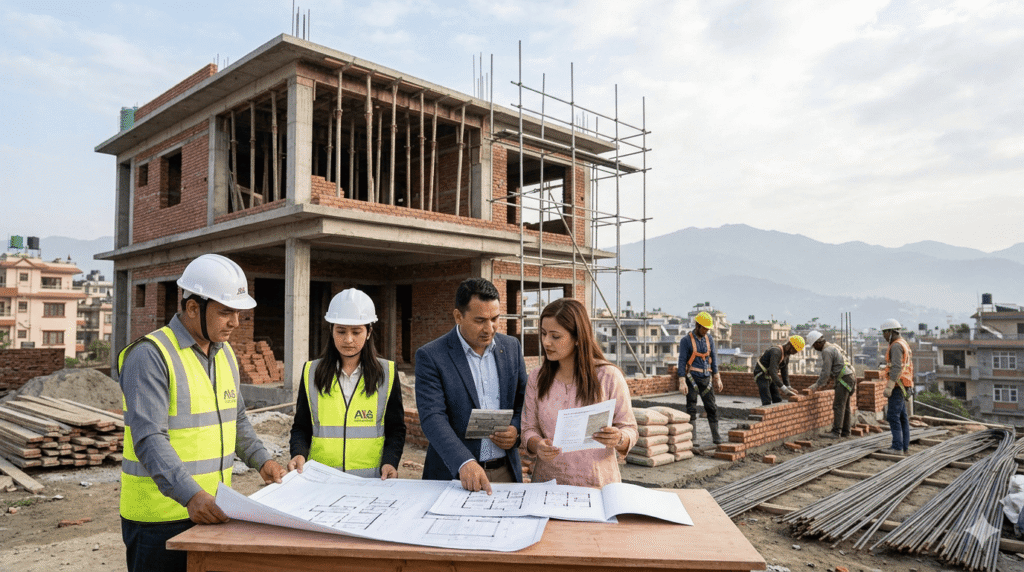
Why Choosing the Right Construction Company Matters
A construction project is not like buying furniture. You cannot return it if something goes wrong.
Once the foundation is laid incorrectly, fixing it costs more than doing it right the first time. Once walls go up with poor materials, the damage may not show for years until cracks appear or water seeps in.
Nepal also has unique challenges that make this decision even more critical:
Seismic risk. Nepal sits in one of the world’s most earthquake-prone zones. Your building must meet structural engineering standards that protect lives, not just look good.
Municipal requirements. Every structure needs a building permit and Naksha Pass approval from the local municipality. A company unfamiliar with this process can delay your project by months.
Varied labour quality. Skilled masons, carpenters, and site supervisors are not equally available everywhere. An experienced company manages this an amateur cannot.
Choosing a reliable construction company in Nepal is not just about price. It is about protecting your investment and your family’s safety for decades.
- Qualities of the Best Construction Companies in Nepal
- 1. Legal Registration and Licensing
- 2. Proven Project Experience
- 3. In-House Technical Team
- 4. Transparency in Cost Estimation
- 5. Strong Client Reviews and References
- Services Offered by Professional Construction Firms
- House Construction Services
- Turnkey Construction
- Architecture Design
- 3D House Modelling
- Engineering Project Management
- Questions to Ask Before Hiring a Construction Company
- Red Flags You Should Never Ignore
- Turnkey vs Labour Contract: Which Is Better?
- What Is a Turnkey Contract?
- What Is a Labour Contract?
- Comparison Table
- How to Compare Construction Companies in Nepal
- Comparison Checklist
- Final Checklist Before Signing a Contract
Qualities of the Best Construction Companies in Nepal
When you look at the top construction companies in Nepal, certain qualities appear again and again. Here is what separates the good ones from the rest.
1. Legal Registration and Licensing
Any serious construction firm in Nepal should be registered with the Department of Industry or the relevant municipality. They should also have a valid contractor’s licence.
Ask to see it. A licensed construction company in Nepal is accountable to regulatory bodies. An unlicensed one is not accountable to anyone.
2. Proven Project Experience
Experience is not just about years in business. It is about the type and scale of projects completed.
A company that has only built small houses may not be the best choice for a four-storey commercial building. Ask for a portfolio. Visit completed projects if possible. Talk to past clients.
Experienced construction companies in Nepal will be happy to show you their work. Ones with nothing to show will avoid the question.
3. In-House Technical Team
The best firms have their own civil engineers, architects, and project managers on staff. They do not outsource every decision.
This matters because it means one team is responsible for architectural design, structural engineering, and site supervision. Problems get caught early. Communication is faster.
4. Transparency in Cost Estimation
A professional construction company in Nepal will give you a detailed cost estimate. This should break down materials, labour, site preparation, and overheads.
Vague estimates like “we’ll manage it within your budget” are a warning sign. You need numbers, not assurances.
5. Strong Client Reviews and References
Word of mouth is powerful in Nepal’s construction industry. Ask for references from at least two or three past clients.
Check if the company delivered on time. Ask if there were cost overruns. Find out how they handled problems on site. Real reviews reveal more than any brochure.
Services Offered by Professional Construction Firms
Not all construction companies offer the same scope of work. Understanding what each type provides helps you choose the right fit.
House Construction Services
This covers the full process of building a residential home from foundation work and framing to plastering, flooring, and finishing.
A strong House Construction Services provider will handle Naksha Pass approval, structural design, and site supervision as part of a single package.
Turnkey Construction
Turnkey Construction means the company handles everything. You hand over the land and the key is handed back to you when the house is complete.
This is ideal for clients who cannot supervise construction daily such as those working abroad or in another city.
Architecture Design
Good Architecture Design goes beyond just drawing floor plans. It considers natural light, ventilation, earthquake resistance, and how the house will function for your family over time.
3D House Modelling
Before any construction begins, you can now see exactly what your house will look like. 3D House Modelling helps you catch design problems early, before they cost money to fix on site.
Engineering Project Management
Engineering Project Management covers site inspection, contractor supervision, quality control, and construction timeline management. This is critical for keeping projects on schedule and within budget.
Questions to Ask Before Hiring a Construction Company
Never hire a contractor based on a single meeting or a glossy brochure. Ask these questions and judge the answers carefully.
- Are you registered and licensed? Ask for documents. Verify them if possible with the Department of Industry or local municipality.
- Who will be on site daily? Find out if a qualified engineer or site supervisor will be physically present. Many contractors assign site oversight to someone with no formal training.
- Can I see a portfolio of completed projects? Request photos, addresses, and contact details of past clients. A company confident in its work will provide these without hesitation.
- What is included in your cost estimate? Ask for a full breakdown: materials, labour, finishes, permits. Know exactly what you are paying for.
- How do you handle design changes mid-project? Changes happen. A professional company will have a clear process for managing variation orders and adjusting costs transparently.
- What is the construction timeline? Get a project schedule with key milestones. This keeps both parties accountable.
- What warranty do you offer after completion? Ask about defect liability periods and what is covered. A company that stands behind its work will offer a warranty in writing.
- What contract will you provide? You should receive a formal written contract covering scope of work, timeline, payment schedule, materials specification, and dispute resolution.
Red Flags You Should Never Ignore
Some things should stop you immediately. Here are the most common red flags in Nepal’s construction industry.
No written contract. Any contractor who works on a handshake is taking your money with no accountability. Do not proceed.
Unusually low quotes. A quote far below market rate usually means corners will be cut on materials, labour, or both. House Construction Cost in Nepal has a typical range depending on project type. Know it before comparing quotes.
No past client references. If a company cannot give you a single reference, ask why. The answer will tell you everything.
Pressure to pay a large advance. A standard advance is reasonable. But if a contractor demands 50% or more upfront before any work begins, that is a risk.
No involvement in Naksha Pass or building permit. A company unfamiliar with the Naksha Pass Process will cause delays and legal problems. Municipal approval is not optional.
Vague answers about who does the work. Some contractors take your money and sublet to whoever is cheapest. Make sure the company you hire is the company that builds your home.
Turnkey vs Labour Contract: Which Is Better?
This is one of the most common questions homeowners in Nepal ask. The right answer depends on your situation.
What Is a Turnkey Contract?
In a Turnkey Construction contract, the company manages everything. Design, materials procurement, labour, and project management are all included. You pay a fixed or agreed price and receive a finished building.
What Is a Labour Contract?
In a Labour Contract vs Turnkey Contract, you supply the materials yourself. The company provides only the workforce. You manage procurement, quality control, and material deliveries.
Comparison Table
| Factor | Turnkey Contract | Labour Contract |
| Who buys materials | Company | Client |
| Client involvement | Low | High |
| Price predictability | Higher (fixed price possible) | Variable |
| Risk of material quality | Lower | Higher (client dependent) |
| Best for | Busy clients, NRNs abroad | Experienced builders on tight budget |
| Management burden | On the company | On the client |
| Typical cost | Higher overall | Lower if managed well |
| Accountability | Single point of contact | Shared harder to assign blame |
The honest answer: If you have time to supervise and know how to source good-quality materials, a labour contract can save money. If you do not, turnkey is worth every extra rupee.
How to Compare Construction Companies in Nepal
Use this checklist when evaluating any construction firm.
Comparison Checklist
- Is the company legally registered and licensed?
- Do they have civil engineers and architects on staff?
- Can they provide a detailed cost estimate in writing?
- Do they have a portfolio of completed residential or commercial projects?
- Can they provide at least two verifiable client references?
- Do they handle Naksha Pass and building permit procedures?
- Do they offer a written contract with clear terms?
- Is the construction timeline realistic and documented?
- Do they specify the quality and brand of materials to be used?
- Do they offer a post-completion warranty or defect liability period?
- Are their payment terms structured in stages (not 100% upfront)?
- Do they have a process for handling design changes and cost variations?
Score each company against this list. The one that checks the most boxes with evidence not just promises is the one worth talking to seriously.
Final Checklist Before Signing a Contract
Once you have chosen a company, do not sign anything until you verify these items.
Verify legal credentials. Company registration number, PAN number, and contractor’s licence should all be on the contract.
Read the scope of work carefully. Every task should be described in writing. “As discussed” is not a scope. Make sure foundation work, flooring type, roofing materials, and finishes are all specified.
Check the payment schedule. Payments should be tied to progress milestones not arbitrary dates. A typical structure might be: 20% on signing, 30% after foundation, 30% mid-construction, 20% on handover.
Confirm the construction timeline. Delays are common. Ask what happens if the company misses key milestones. A professional firm will acknowledge this and may include penalty clauses.
Ensure warranty terms are in writing. Verbal promises mean nothing after the company leaves the site. Get the defect liability period, what it covers, and how to claim it all in writing.
Understand what is excluded. Some contracts exclude site clearance, water connections, or compound walls. Know what you are responsible for separately.
Get independent advice if needed. If you are uncertain about any clause, consult an independent civil engineer before signing. A few thousand rupees in advice can save lakhs later.