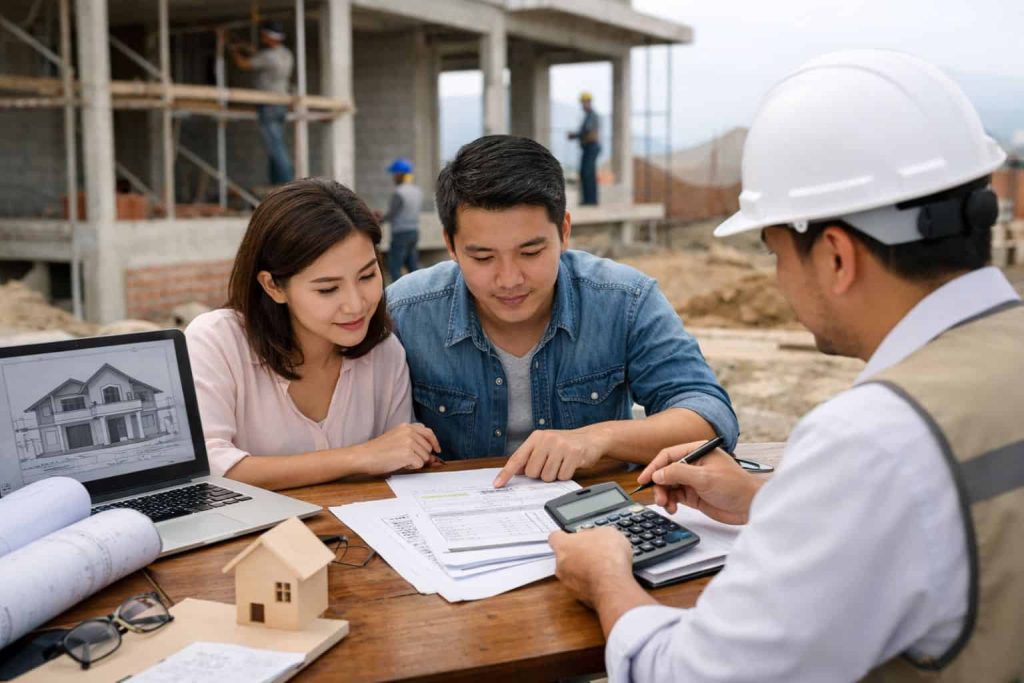
Building a house or a commercial property in Nepal is one of the biggest financial moves a family or a business owner will ever make. Yet the decision that shapes everything else usually gets the least attention. Who you actually hire to build it. People spend weeks picking tile finishes and paint colors and then choose a construction company after one phone call and the lowest quote.
This is where most construction problems in Nepal really start. A missed municipal approval. A foundation poured without proper soil testing. A contractor who disappears halfway through the project. A final bill that lands far above the estimate. None of this is bad luck. It is almost always the predictable result of hiring the wrong company for the wrong reasons.
This guide walks through what actually separates a trustworthy construction company from a risky one in the Nepal market today. What to check before signing anything. The red flags that should end a conversation right away. And the questions that get you honest answers early before your money and your land are on the line.
- Why the Right Construction Company Matters So Much
- What Makes a Construction Company Trustworthy
- Twelve Things to Check Before You Hire Anyone
- 1. Check the Company Registration
- 2. Look at Previous Projects
- 3. Talk to Past Clients
- 4. Confirm the Engineering Team
- 5. Ask for a Detailed BOQ
- 6. Get a Realistic Timeline
- 7. Read the Contract Properly
- 8. Understand How Payments Work
- 9. Ask What Materials Will Actually Be Used
- 10. Ask About Their Local Permit Experience
- 11. Ask About Warranty and After Service
- 12. Ask How Often They Actually Show Up on Site
- Red Flags You Should Never Ignore
- Questions Every Homeowner Should Ask Before Hiring
- Local Contractors vs Professional Construction Companies
- Why Engineering Expertise Matters So Much
- How to Actually Compare Construction Quotes
- What a Good Contract Should Actually Cover
- How SKR Groups Builds Trust With Clients
- Why Homeowners Across Nepal Choose SKR Groups
- A Few Questions People Keep Asking
- Final Thoughts
Why the Right Construction Company Matters So Much
The company you hire does not just build a structure. It shapes almost every outcome that matters once the building stands.
- Quality: the gap between a structure built to specification and one where corners get cut in places you cannot see once the walls are plastered.
- Safety: Nepal sits in one of the most active earthquake zones in the world and structural decisions made during construction are the biggest factor in how a building holds up when the ground shakes.
- Budget: a company that lowballs the first quote and makes it back through change orders and cheaper materials ends up costing more than a higher honest quote from day one.
- Timeline: delays add up fast. A three month delay on a house project often means paying rent longer and pushing a family plan back a full season.
- Legal standing: municipal approval and a proper completion certificate affect whether you can get utility connections later or use the property as loan collateral.
- Long term upkeep: how well a building was actually put together shows up years later in whether walls crack or roofs leak or foundations settle unevenly.
Every one of these outcomes gets set in motion long before the first brick goes down. At the moment you choose who to hire.
What Makes a Construction Company Trustworthy
There is no single certificate that guarantees a good experience. But trustworthy construction companies in Nepal tend to share the same traits.
- A business that is properly registered and can be checked against records at the Office of the Company Registrar and tax records with the Inland Revenue Department.
- Licensed engineers and architects on staff or under contract and registered with the Nepal Engineering Council rather than unlicensed people drawing up structural plans.
- Experienced project managers who treat timeline and materials and labor and municipal approvals as one coordinated process instead of separate problems left for the client to solve.
- Transparent itemized quotes built on a proper Bill of Quantities instead of one lump sum figure with no breakdown.
- Written contracts that spell out scope and timeline and payment milestones and what happens if either side falls behind.
- Clear and responsive communication that keeps going after the sales conversation ends.
- Workmanship you can verify by visiting real projects instead of only looking at photographs.
- Documented safety practices on site especially around excavation and scaffolding and structural work.
- Some form of after sales support or a defect liability period once construction wraps up.
Notice that price does not show up on this list. Price matters but it is the result of these other factors and never a substitute for them.
Twelve Things to Check Before You Hire Anyone
Work through this list before you sign anything or hand over a first payment. A company that is confident in its own standing will answer all twelve without hesitation.
1. Check the Company Registration
Ask for the registration certificate and PAN and VAT details and check them against records with the Office of the Company Registrar and the Inland Revenue Department. A real company hands these over without hesitation. This one check alone rules out a large share of the risk since an unregistered outfit has no formal accountability if something goes wrong.
2. Look at Previous Projects
Ask to visit two or three finished projects in person instead of only looking at renders or photographs. Look at the finishing quality and any structural details you can see and how the building has held up if it was finished a year or two back.
3. Talk to Past Clients
Talk directly to past clients where you can instead of relying only on testimonials on the company website. Ask whether the project finished on time and whether the final cost matched the estimate and how any disputes actually got resolved.
4. Confirm the Engineering Team
Ask which engineers and architects are attached to your project and whether they are registered with the Nepal Engineering Council. A company that cannot name its technical team or leans on informal site supervisors instead of qualified engineers is a company where structural decisions get made without real oversight.
5. Ask for a Detailed BOQ
A Bill of Quantities breaks the project down into materials and quantities and rates and labor costs. Ask for this instead of a single total figure. A detailed BOQ is what lets you actually compare two companies later and it protects you from vague cost overruns once construction starts.
6. Get a Realistic Timeline
Ask for a stage by stage schedule covering land check and design and building permit approval and foundation and structural frame and roofing and finishing and completion certificate. Be careful of companies that promise an unusually short timeline without explaining how they plan to hit it.
7. Read the Contract Properly
A written contract is not optional. Read it carefully before signing and get independent advice if the project value is significant since this is the document that protects you if the relationship breaks down.
8. Understand How Payments Work
Payments should tie to construction milestones such as foundation done or structural frame done. Never agree to a calendar based schedule alone and never hand over a large advance before work even starts.
9. Ask What Materials Will Actually Be Used
Ask which brands and grades of cement and steel will be used and whether Nepal Standard certification is required in the contract. A trustworthy company spells this out up front instead of leaving material choice vague.
10. Ask About Their Local Permit Experience
Ask whether the company has direct experience getting building permits approved in your specific municipality since requirements and processing time vary a lot between Kathmandu and Lalitpur and other local bodies. A company unfamiliar with your municipality can cost you months in avoidable delay.
11. Ask About Warranty and After Service
Ask what happens if a defect shows up after handover such as a crack or a leak or a settling issue and for how long the company stands behind its own work. No answer to this question is itself an answer.
12. Ask How Often They Actually Show Up on Site
Ask how often a qualified engineer physically visits the site rather than just a general laborer or foreman. Regular documented site supervision is one of the most reliable signs of real build quality since it is where design decisions on paper actually get enforced on the ground.
Red Flags You Should Never Ignore
Some warning signs are subtle. Others are not and should end the conversation right away.
- A quote that sits far below every other bidder with no clear reason for the gap.
- No real office address or an address that turns out to be informal and residential.
- No registered company behind the work. Just an individual operating informally.
- Reluctance to put anything at all in writing.
- Poor or inconsistent communication even before you have signed anything.
- No engineer or architect tied to the project. Design and structural calls left to the builder alone.
- Insistence on cash only payments with no invoices or receipts.
- No portfolio of finished work or a portfolio limited to renders instead of built projects.
- No willingness to give you references from past clients.
- Pressure to sign fast or pay a large advance before you have had time to read the contract.
Any single item on this list is worth a conversation. More than two or three together and it is time to walk away no matter how good the price looks.
Questions Every Homeowner Should Ask Before Hiring
Bring this list to your first real conversation with any construction company. How they answer matters as much as what they answer.
- Is your company formally registered and can I see your registration and PAN and VAT documents?
- Which engineers or architects will handle this project and are they registered with the Nepal Engineering Council?
- Can I visit two or three of your finished projects and speak with those clients directly?
- Can you give me a detailed BOQ instead of a single lump sum quote?
- What is your realistic timeline for each stage from the building permit through the completion certificate?
- What happens if the project runs past the agreed timeline?
- How is the payment schedule set up and is it tied to milestones?
- What brands and grades of cement and steel do you plan to use and are they Nepal Standard certified?
- Have you gotten building permits approved in this specific municipality before?
- How often will a qualified engineer physically check the site?
- How do you handle design changes requested after construction has already started?
- What warranty or defect liability period do you offer after handover?
- Who is my main point of contact through the project and how fast do you usually respond?
- Can I see a sample construction contract before we talk through final terms?
- How do you handle disagreements if either side is unhappy with progress or cost?
Local Contractors vs Professional Construction Companies
Both individual contractors and professional construction companies build houses across Nepal. The right choice depends on how big and how complex your project actually is. The trade offs are worth understanding clearly.
- Cost: individual contractors often quote lower up front but professional companies tend to control cost overruns better through detailed BOQs and organized procurement.
- Quality: professional companies usually apply the same quality control across every project while quality with an individual contractor depends heavily on whichever crew shows up for your job.
- Accountability: a registered company can be held to a written contract while an informal contractor with no business registration is far harder to hold accountable if the work turns out defective or incomplete.
- Engineering support: professional companies generally keep engineers and architects in house or under contract while many individual contractors do not and structural calls may get made with no real technical oversight.
- Timeline: companies with dedicated project managers tend to coordinate labor and materials and approvals more reliably than one contractor juggling several sites at once.
- Paperwork: professional companies are more likely to give you contracts and BOQs and defect liability terms in writing which matters most if a dispute ever comes up.
- Risk: for a small straightforward renovation an experienced local contractor can be a fair lower cost choice while for a full house build in an earthquake zone the added engineering oversight of a professional company cuts structural risk in a real way.
Why Engineering Expertise Matters So Much
A large share of construction problems in Nepal trace back to decisions that never went through a qualified engineer. Structural shortcuts. The wrong foundation type for the soil conditions. Building code gaps that only show up once something actually fails.
Engineering expertise shapes a project in a few concrete ways.
- Structural design: correct column sizing and reinforcement detail and load calculations suited to earthquake risk in Nepal and the National Building Code.
- Site supervision: catching a deviation from the approved drawings before it gets poured in concrete and becomes expensive or impossible to fix.
- Building code compliance: making sure the design and the build actually meet what is required for the permit and the final completion certificate.
- Material quality: specifying and checking the grade of cement and steel and aggregate that fit the structural demands of the design.
- Cost control: an experienced engineer can often spot where money is being spent for nothing and where it should never be cut.
- Long term durability: decisions made correctly during design and construction are what decide how a building performs decades later including during an earthquake.
Groups such as the National Society for Earthquake Technology Nepal have long pointed out that engineering oversight during construction and not only at the design stage is one of the biggest factors in how a building holds up in an earthquake.
How to Actually Compare Construction Quotes
Comparing quotes on a single total number is one of the most common mistakes homeowners make. A real comparison means looking under that number at a few layers.
- BOQ: does each quote break down materials and quantities and rates or is it one lump sum you cannot check.
- Scope of work: are the same items included in every quote such as plumbing and electrical and plastering and painting or is one bidder quietly leaving something out.
- Hidden costs: ask directly whether VAT and transport and municipality fees and site supervision charges are included or added on later.
- Material specifications: confirm the exact brand and grade for cement and steel and other core materials in each quote since a lower price often means a lower material grade.
- Labor costs: check whether skilled trades such as masonry and tiling and electrical and plumbing are broken out or buried in one vague labor line.
- Timeline: a faster timeline only counts as an advantage if the quality and staffing behind it also hold up.
- Payment milestones: compare how each company ties payments to progress instead of just comparing the total amount.
Two quotes that look almost the same on the final number can turn out to be very different projects once you compare them line by line.
What a Good Contract Should Actually Cover
A construction contract is the document that protects you if anything goes wrong so it deserves a careful read before you sign. At minimum it should clearly cover.
- Scope: exactly what is and is not part of the project.
- Timeline: a stage by stage schedule with target dates.
- Change orders: how a design change requested after work starts gets priced and approved.
- Payment schedule: milestones and amounts and what actually triggers each payment.
- Warranty: the defect liability period after handover and what it actually covers.
- Delay terms: what happens if the company misses an agreed date.
- Defect process: how issues found after completion get reported and fixed.
- Responsibilities: which side handles permits and utility connections and site safety.
If a company is reluctant to put any of this in writing treat that reluctance as information on its own.
How SKR Groups Builds Trust With Clients
SKR Groups treats every project as an engineering process first and not a sales pitch. That means a transparent BOQ based quote instead of one unexplained figure. An engineering team involved from design through supervision. And regular documented site visits instead of occasional check ins.
Coordination with the local municipality for permit approval is handled as part of the project itself since permit delay is one of the most common and most avoidable causes of schedule slip. Detailed planning at the design stage before construction even starts is treated as the point where most later cost overruns actually get prevented. Through the project clients get a consistent point of contact instead of having to chase updates on their own.
None of this makes a project immune to challenges. Building in Nepal comes with real variables such as weather and material supply and land conditions and how fast a municipality processes paperwork. A transparent process just makes those challenges visible and manageable as they come up instead of turning into a dispute at the end.
Why Homeowners Across Nepal Choose SKR Groups
Clients who pick SKR Groups tend to point to a small set of practical reasons rather than marketing lines.
- A registered engineering team involved in both design and construction and not a design studio sitting apart from the build.
- Itemized BOQ based quotes that let you see exactly what you are paying for.
- Direct experience getting building permits approved across different municipalities in and around the Kathmandu Valley.
- Site supervision that is scheduled and documented and not occasional.
- One point of contact through the whole project which cuts down the coordination work left to the client.
- A track record of finished projects you can actually go visit instead of only render images.
A Few Questions People Keep Asking
How do I know if a construction company is actually genuine?
Check its business registration with the Office of the Company Registrar and confirm its PAN and VAT status with the Inland Revenue Department. Then check whether its engineers are registered with the Nepal Engineering Council. Visiting finished projects and talking to past clients directly adds another layer of confidence beyond paperwork.
Should I hire an individual contractor or a full construction company?
For small straightforward renovation work an experienced individual contractor can be a fair choice. For a full house build especially in an earthquake zone a registered construction company with real engineering support cuts down structural and legal risk in a meaningful way.
How important is a BOQ really?
A Bill of Quantities is what lets you compare quotes in a meaningful way and track cost during construction and hold a company to specific materials and quantities instead of one vague total figure.
How do I avoid getting scammed during construction?
Verify registration and credentials before paying anything. Insist on a written contract with payments tied to milestones instead of one large advance up front. And treat a quote sitting far below every other bidder as a warning sign rather than a bargain.
Final Thoughts
Choosing a construction company is a decision that plays out over years and not months. It shapes your budget and your timeline and your legal standing with the municipality and in the end the safety of anyone who lives or works in that building. The cheapest quote rarely accounts for any of that. And the companies most willing to explain their process in detail are usually the ones best set up to actually deliver on it.
Put experience and transparency and engineering skill ahead of the lowest number on a page. Ask the questions in this guide before you sign anything and treat a company willingness to answer them clearly as one of the most useful signals you have.
If you are planning a house build or a renovation or a commercial project in Nepal and want a transparent engineering led process from the first conversation through handover SKR Groups offers planning and BOQ preparation and architectural design and engineering supervision and full construction service. Reach out to talk through your project and get a clear itemized starting point.