A bathroom in most Nepali homes ends up being an afterthought during the original construction, and it shows. Cramped layouts, leaking pipes, fading tiles, and damp walls are common in houses built 10 to 30 years ago in Kathmandu, Lalitpur, Bhaktapur, Pokhara, and other cities. Renovating that space is one of the few home improvements that pays you back twice: once in daily comfort, and again in resale value when you sell the property. This guide walks through what a bathroom renovation actually costs in Nepal in 2026, which materials hold up best in our climate, how the work is typically done, and how to plan a layout and design that won’t need redoing in five years.
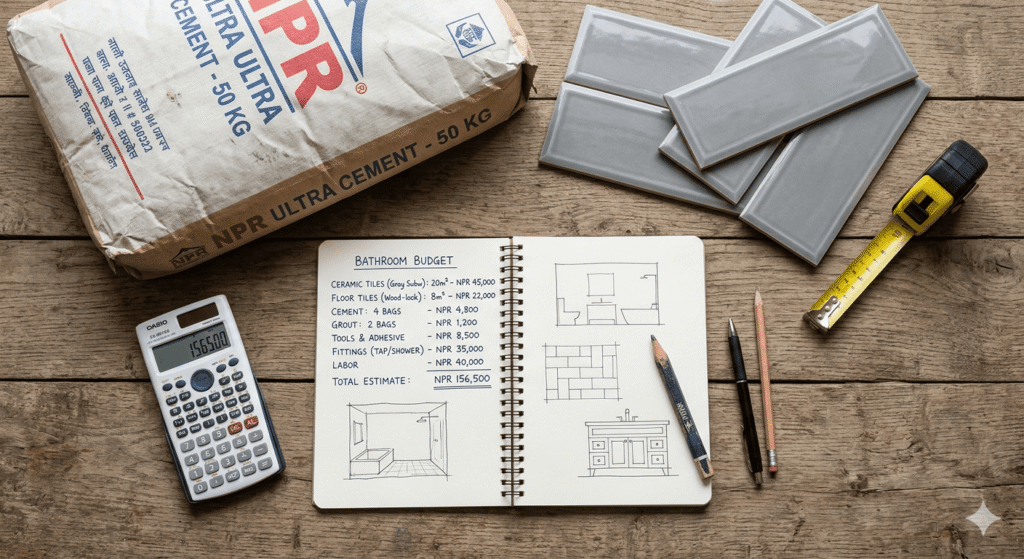
- How Much Does a Bathroom Renovation Cost in Nepal?
- Cost Breakdown by Per Square Foot Rate
- What Drives the Cost Up or Down
- Sample Cost Table (Mid-Range Bathroom, ~40 sq ft)
- What’s Included in a Bathroom Renovation
- Materials: What to Use and Why It Matters in Nepal’s Climate
- Tiles
- Waterproofing Compounds
- Sanitaryware and Fittings
- Cement, Grout, and Epoxy
- Design Ideas That Work for Nepali Homes
- Small Bathroom Layouts
- Wet and Dry Zone Separation
- Lighting and Ventilation
- Storage
- Step-by-Step Renovation Process
- Common Mistakes to Avoid
- Frequently Asked Questions
- How long does a bathroom renovation take in Nepal?
- Can a bathroom be renovated within a tight budget?
- Does bathroom renovation increase resale value?
- Is it necessary to break the floor during renovation?
- What is the best tile type for Nepali bathrooms?
How Much Does a Bathroom Renovation Cost in Nepal?
Bathroom renovation cost in Nepal depends heavily on three things: the size of the bathroom, the quality of tiles and fittings you choose, and whether the plumbing layout is being changed or just refreshed. A small repair-and-repaint job costs far less than a full strip-down that moves the toilet, shower, and drain lines.
As a working range for 2026:
- Basic refresh (new tiles over old surface, new fittings, no plumbing changes): NPR 70,000 – 1,50,000
- Mid-range full renovation (new tiles, waterproofing, standard sanitaryware, minor plumbing rework): NPR 3,00,000 – 4,50,000
- Premium renovation (imported tiles, branded fittings, layout change, glass shower partition): NPR 5,00,000 – 8,00,000 and above
Most homeowners renovating a standard 35–50 sqft bathroom with decent quality tiles and fittings end up spending between NPR 3,50,000 and 6,00,000, which lines up with what local contractors quote across Kathmandu Valley. A smaller toilet-only touch-up repainting, replacing a tap, swapping the commode can be done for as little as NPR 25,000 to 80,000.
Cost Breakdown by Per Square Foot Rate
If you want a rougher but quicker estimate, contractors often quote by area. Renovation work in Nepal, including bathroom-specific jobs, typically falls between NPR 1,000 and 3,000 per sq. ft. for standard finishes, rising to NPR 1,500–5,000+ per sq. ft. for premium tiles, branded sanitaryware, and detailed finish work. A bathroom with 127 sqft of wall area and 32 sqft of floor area, for example, can realistically be tiled and waterproofed for around NPR 90,000–1,00,000 using good mid-range materials, before adding sanitaryware and labor for plumbing and electrical work.
What Drives the Cost Up or Down
- Tile brand and finish imported or large-format tiles cost 2–4x more than local tiles
- Whether the floor needs to be broken open to redo drainage slope and waterproofing
- Sanitaryware brand Hind ware or Parry ware sit at the affordable end; Kohler, Roca, or Duravit sit much higher
- Plumbing changes relocating a toilet or shower point costs more than refitting in the same spot
- Labor rates, which vary by city and contractor experience
- Accessibility upper-floor bathrooms or narrow access points raise material transport costs
Sample Cost Table (Mid-Range Bathroom, ~40 sq ft)
| Item | Approx. Quantity | Approx. Cost (NPR) |
| Wall + floor tiles (mid-range) | 160 sq ft | 40,000 – 70,000 |
| Cement, sand, aggregate | As needed | 12,000 – 18,000 |
| Waterproofing compound | 1–2 coats | 8,000 – 15,000 |
| Sanitaryware (commode, basin, shower set) | 1 set | 25,000 – 80,000 |
| Plumbing pipes and fittings | As needed | 15,000 – 30,000 |
| Labor (tiling, plumbing, masonry) | 15–25 days | 60,000 – 1,20,000 |
| Electrical (geyser point, lighting) | As needed | 10,000 – 20,000 |
These figures are indicative. Always get at least two or three written quotes from local contractors before committing, since rates shift with the area you live in and current material prices.
What’s Included in a Bathroom Renovation
A full bathroom renovation in Nepal usually covers more than just new tiles. A complete job typically includes:
- Demolition and removal of old tiles, fixtures, and damaged pipework
- Replumbing new pipelines installed with correct slope and tested for pressure and leaks
- Waterproofing of the floor and at least 2–3 feet up the walls, especially around the shower and floor drain
- Electrical work for lighting, exhaust fan, and geyser points
- Tiling of walls and floor
- Installing the toilet, wash basin, shower fittings, mirror, and accessories
- Final water testing and quality checks before handover
Skipping waterproofing to save money is the single most common regret homeowners report later. Water that seeps through an untreated floor slab damages the ceiling of the room below and is far more expensive to fix once tiles are already laid.
Materials: What to Use and Why It Matters in Nepal’s Climate
Nepal’s mix of humidity, monsoon rainfall, and seismic activity makes material choice more than a cosmetic decision. The wrong tile or grout can crack, lift, or trap moisture within a couple of years.
Tiles
Anti-skid, matte-finish tiles are the safer choice for bathroom floors, since glossy tiles become dangerously slippery when wet. Local tiles cost roughly NPR 90–150 per piece and work well for budget projects, while vitrified or imported tiles from brands like Kajaria, Somany, or Simpolo run higher but offer better water resistance and a longer lifespan. For walls, glossy or textured tiles are fine since slip resistance isn’t a concern there.
Waterproofing Compounds
A liquid waterproofing membrane applied before tiling is non-negotiable for any bathroom that sits above another floor. Products typically cost around NPR 1,200–1,800 per liter or kg, and a standard bathroom needs at least two coats, applied to the floor and lower wall sections, with extra attention around pipe penetrations and the floor drain.
Sanitaryware and Fittings
Hindware and Parryware remain the most common mid-range brands in Nepal, offering reliable commodes, basins, and shower sets at accessible prices. For taps and mixers, chrome-finish brass fittings resist corrosion far better than cheaper zinc-alloy alternatives, which tend to pit and discolor within a year or two in humid bathrooms.
Cement, Grout, and Epoxy
Standard cement runs around NPR 850 per bag, with sand and aggregate priced separately. Epoxy grout costs more than ordinary cement-based grout but is worth the difference in a bathroom, since it resists staining, doesn’t crack as easily, and stops water from seeping into the joints between tiles.
Design Ideas That Work for Nepali Homes
Most bathrooms in Nepali homes are compact, often between 30 and 50 sq. ft., so the design choices that matter most are the ones that make a small space feel functional rather than the ones you’d see in a showroom catalogue.
Small Bathroom Layouts
- Wall-mounted basins free up floor space and make cleaning easier
- A corner shower with a glass partition instead of a full enclosure keeps the room feeling open
- Light-colored, large-format tiles make a small bathroom look bigger than dark or heavily patterned ones
- Built-in wall niches for shampoo and soap remove the need for extra shelving
Wet and Dry Zone Separation
Separating the shower area from the rest of the bathroom with a half-wall, glass partition, or even a slight floor-level change keeps the toilet and basin area dry, reduces slip risk, and slows down mold growth on walls that would otherwise stay damp.
Lighting and Ventilation
A working exhaust fan is one of the cheapest upgrades that does the most to prevent damp walls and mold, which are common complaints in older Nepali bathrooms with no ventilation beyond a small window. Pairing a warm-white ceiling light with a brighter LED strip near the mirror gives better visibility for grooming without making the whole room feel clinical.
Storage
Built-in tiled shelves or a recessed mirror cabinet work better than freestanding furniture in small bathrooms, since they don’t trap moisture underneath and don’t reduce usable floor space.
Step-by-Step Renovation Process
- Planning decide on budget, layout changes, and overall design before any work starts
- Material selection finalize tiles, sanitaryware, pipes, and waterproofing products
- Demolition remove old tiles, fixtures, and damaged plumbing
- Plumbing and electrical rework new pipelines with correct slope, pressure-tested before closing walls
- Waterproofing applied to floor and lower walls, then tested before tiling begins
- Tiling walls first, then floor, with attention to slope toward the drain
- Fixture installation toilet, basin, shower, mirror, and accessories
- Final testing water flow, drainage, and leak checks before handover
A standard bathroom renovation takes about 15 to 25 days from demolition to handover. Larger projects involving layout changes or plumbing relocation can stretch to 4–6 weeks. Avoid making design changes mid-project every change after work has started adds cost and delays the timeline.
Common Mistakes to Avoid
- Skipping or under-applying waterproofing to cut costs
- Choosing glossy tiles for the floor instead of anti-skid ones
- Not testing the plumbing for leaks before tiling over it
- Underestimating labor time during monsoon season, when work slows down
- Picking fittings based on looks alone without checking brand reliability or spare-part availability
- Not getting a written quote and timeline before work begins
Frequently Asked Questions
How long does a bathroom renovation take in Nepal?
A standard renovation takes 15 to 25 days. Larger projects with layout or plumbing changes can take 4 to 6 weeks.
Can a bathroom be renovated within a tight budget?
Yes. A basic refresh using local tiles, repainting, and replacing only the fittings that need it can be done for NPR 70,000 to 1,50,000. The key is being selective about what actually needs replacing versus what can be cleaned and reused.
Does bathroom renovation increase resale value?
A renovated bathroom can increase a home’s resale value by roughly 10–20% in Nepal, particularly for older houses where the bathroom is visibly outdated compared to the rest of the property.
Is it necessary to break the floor during renovation?
Not always. If the existing waterproofing and drainage slope are in good condition, new tiles can sometimes be laid over the old floor. But if there’s any history of leakage or the slope toward the drain is poor, breaking the floor and redoing the waterproofing is the safer long-term choice.
What is the best tile type for Nepali bathrooms?
Anti-skid, matte-finish tiles for the floor and glossy or textured tiles for the walls. Vitrified tiles cost more but resist water absorption better than ceramic, which matters in a climate with heavy monsoon humidity.